Plaster Molding Replication
When the original molding can’t be bought, the detail that survives becomes the pattern for what is missing.
01Overview
Stock trim comes in a few dozen shapes. Your cornice was made for your room, so the only true match is one taken from the original.
Replication is the answer when remodeling, water damage or earlier alterations removed part of a one-of-a-kind molding. The surviving run is documented and used to make a matching section for the same room or the one next to it.
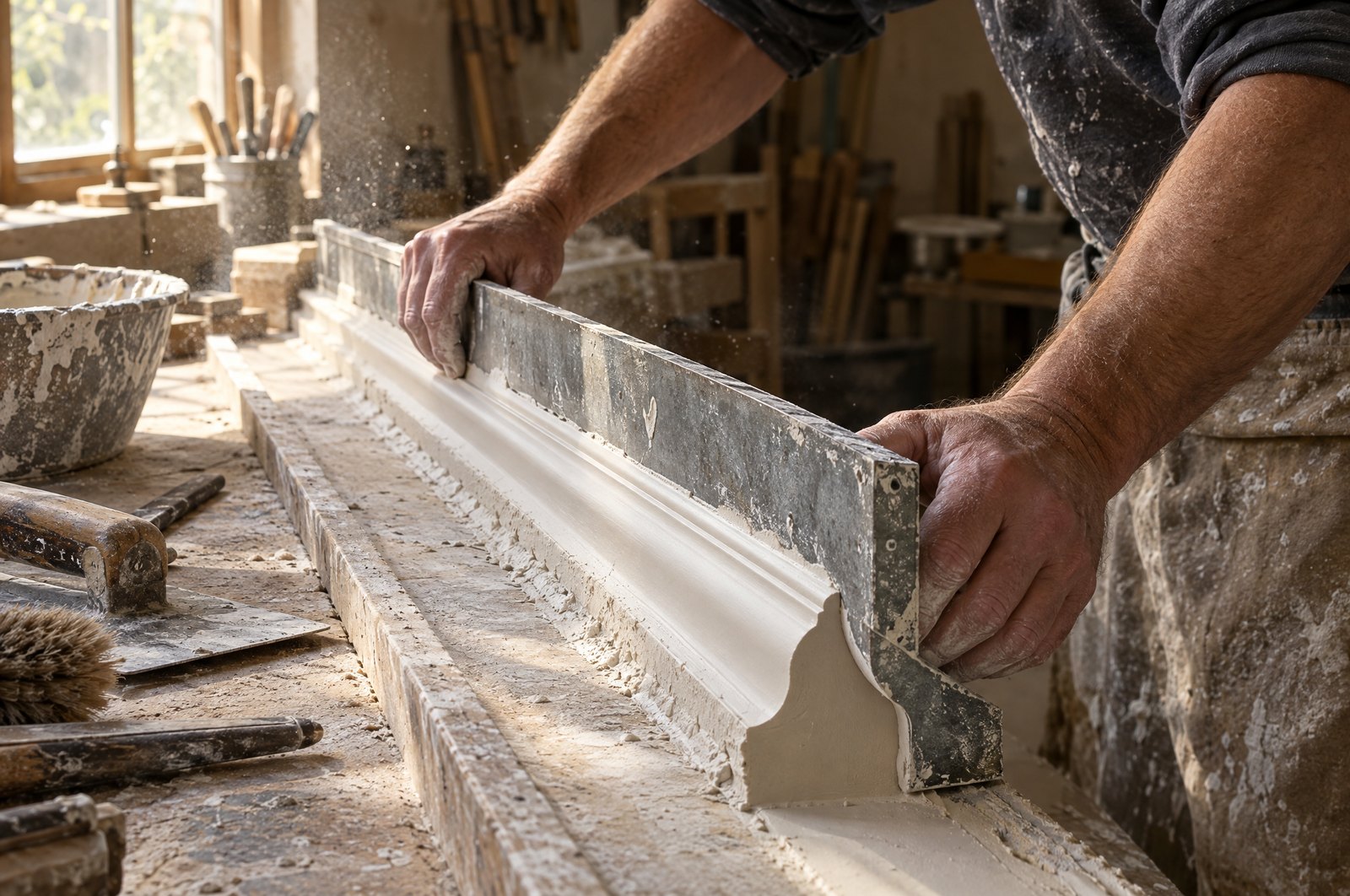
The profile is captured, a template is made from it, and new sections are run or cast to that template so the repair reads as continuous rather than as a patch. The blend at the seam decides whether the result looks original.
If enough original survives to repair rather than replace, that is the better path. See plaster molding restoration.
02How we approach it
Keep what is sound. Match what is missing.
-
1
Find the best surviving run
A sound, crisp section that shows the full sequence of the profile, sometimes in another room or a closet.
-
2
Take the profile
The shape is captured and transferred to a template that matches the original line for line.
-
3
Run or cast, then blend
Plain runs are run to the template; enriched ornament is cast. The joints are tooled by hand until new and old read as one.
03An example
Where the template comes from
A cornice in section, the way it is cut for a running-mould template. Each member of the profile is matched before anything is made.
04Related services
Other original details we restore

05Start here
Have a detail you want to save?
Send photos of the molding, cornice, ceiling detail or railing. We look at every request ourselves and tell you whether it can be repaired, matched or recreated, before anyone schedules a visit.