Plaster Cornice Restoration
Cracked, sagging or missing plaster cornices repaired in place and matched to the original profile, in brownstones and older homes across Hudson County.
01Overview
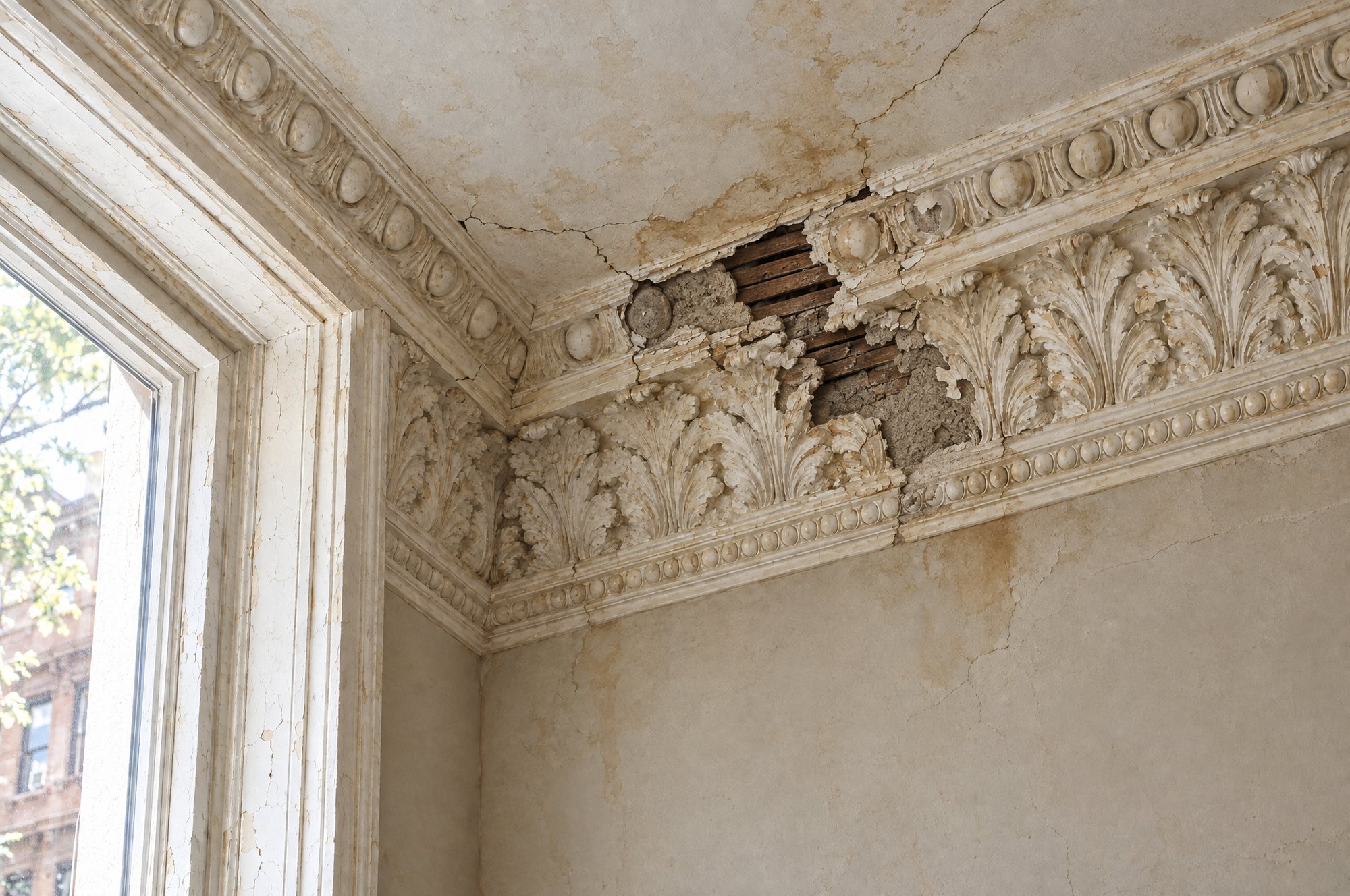
A damaged cornice can almost always be saved. Most of it is usually sound; the work is to secure what has moved and rebuild only the sections that are gone.
The cornice is the run of plaster molding where the wall meets the ceiling. In older homes it is often called crown molding, and in the brownstones and rowhouses of Jersey City and Hoboken it can be a deep, layered profile with egg-and-dart, dentils or leaf enrichment.
Most cornice damage comes from a few causes: a leak from the floor above, a century of the house settling, plaster letting go of the lath, or earlier repairs in joint compound that crack and shrink.
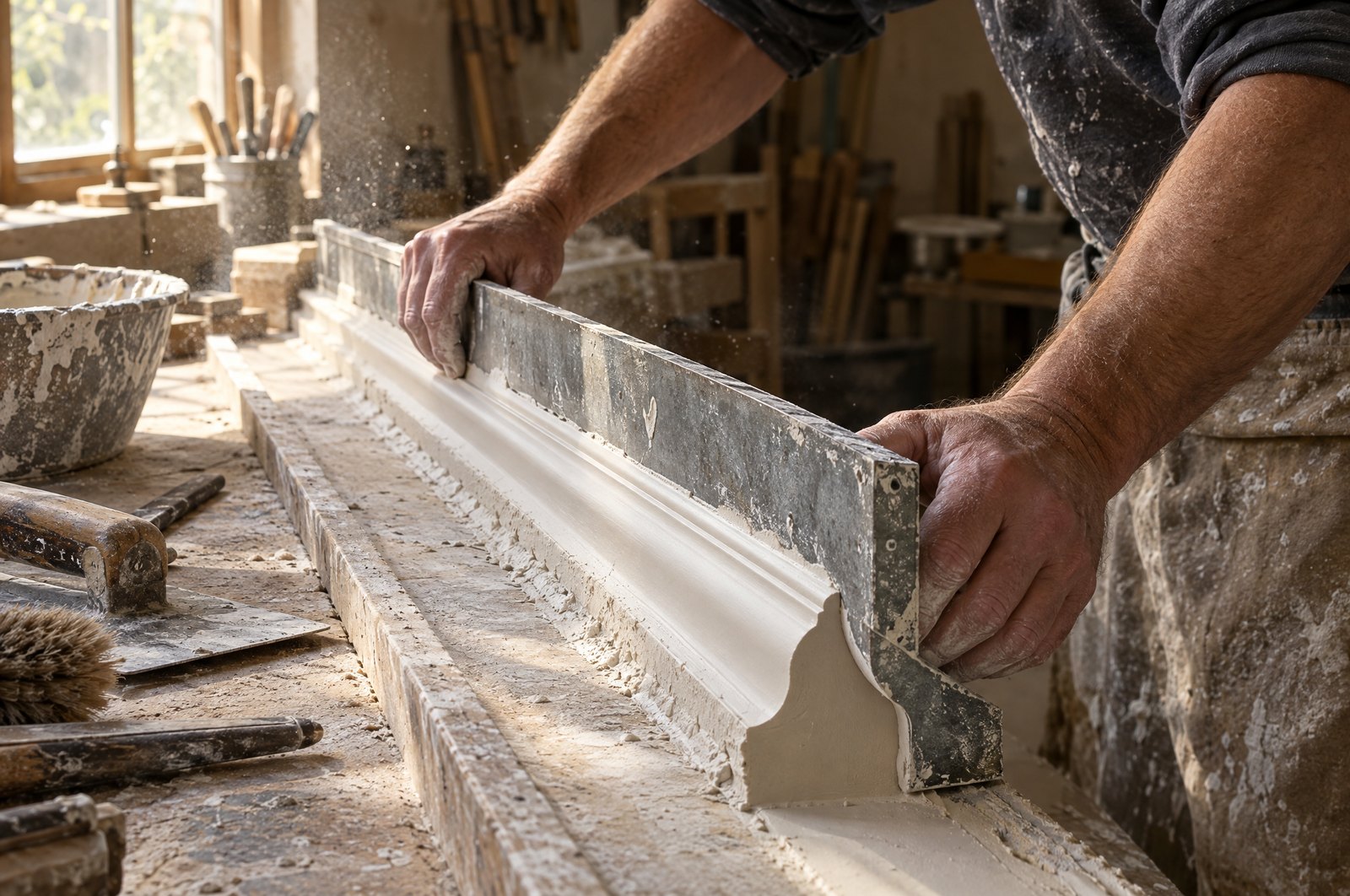
We restore cornices in place wherever we can. Sound runs stay, loose sections are secured, cracks are repaired, and missing lengths are run in plaster to the surviving profile. When a whole profile has to be copied, that is molding replication; for medallions and ornamental panels, see decorative plaster repair.
02How we approach it
Keep what is sound. Match what is missing.
-
1
Photos first
Send a few photos of the room and a close-up of the damage. We tell you whether it can be repaired, matched or recreated before anyone visits.
-
2
Secure and repair
Loose sections are fixed back to the structure, and cracks are repaired in plaster rather than drywall compound.
-
3
Match and blend
Missing lengths are run to the surviving profile and blended so the joint disappears under paint.
03An example
What we usually find
The same few problems show up in most older homes in Hudson County.
- 01
A leak from the floor above
Water softens the plaster and rusts the lath behind it. Once the source is fixed and the plaster has dried, much of the original can usually be secured and kept.
- 02
A crack along the ceiling line
A century of seasonal movement opens a line between cornice and ceiling. It is repaired in plaster, which moves like the original, so it does not reopen next winter.
- 03
An old patch that doesn’t match
Earlier repairs in joint compound often have the wrong profile or a visible seam. They are cut back and the correct profile is run in their place.
- 04
Missing corners and short runs
Corners and short lengths are often lost to renovations, wiring or a fallen section. They are recreated from the profile right next to them.
Common questions
About plaster cornices and how the repair works.
Can a cracked or sagging cornice be saved?
Usually, yes. If the original plaster is still attached in most places, we re-secure it and repair the damaged sections instead of replacing the whole run.
Do you have to replace the whole cornice?
Rarely. Every sound section stays, and only what is missing is recreated, using the surviving profile as the pattern so the new work matches.
Is a cornice the same as crown molding?
In most homes, yes. Cornice is the traditional name for the plaster molding where the wall meets the ceiling; crown molding (or moulding) is the more common name today.
Do you work on exterior or metal cornices?
This page is about interior plaster cornices. If you have an exterior cornice, send photos and we will tell you whether it is work we take on.
How do I get a price?
Send a few photos through the request form. We review them, explain what the repair involves, and then arrange a visit for a firm quote.
04Related services
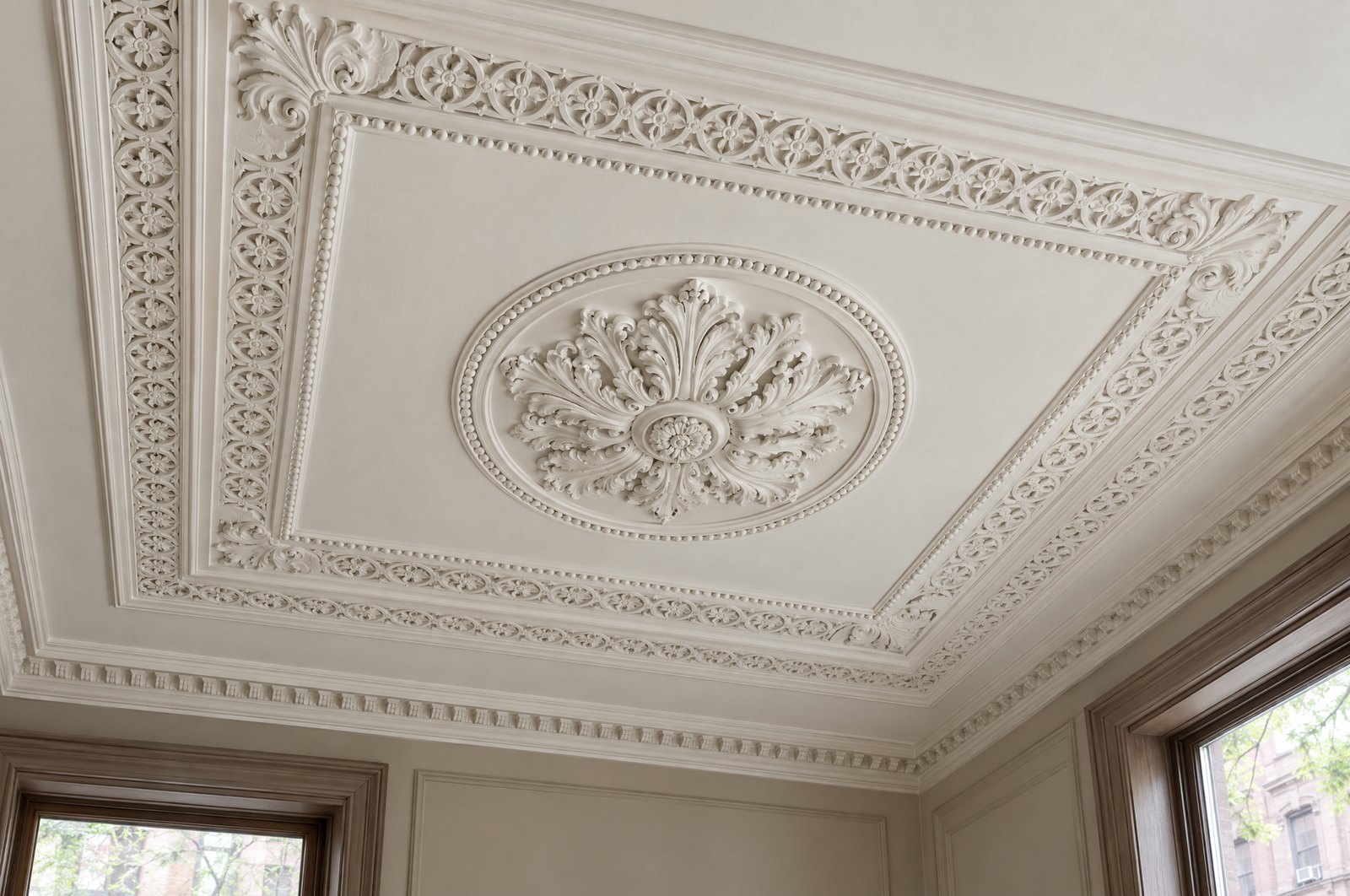
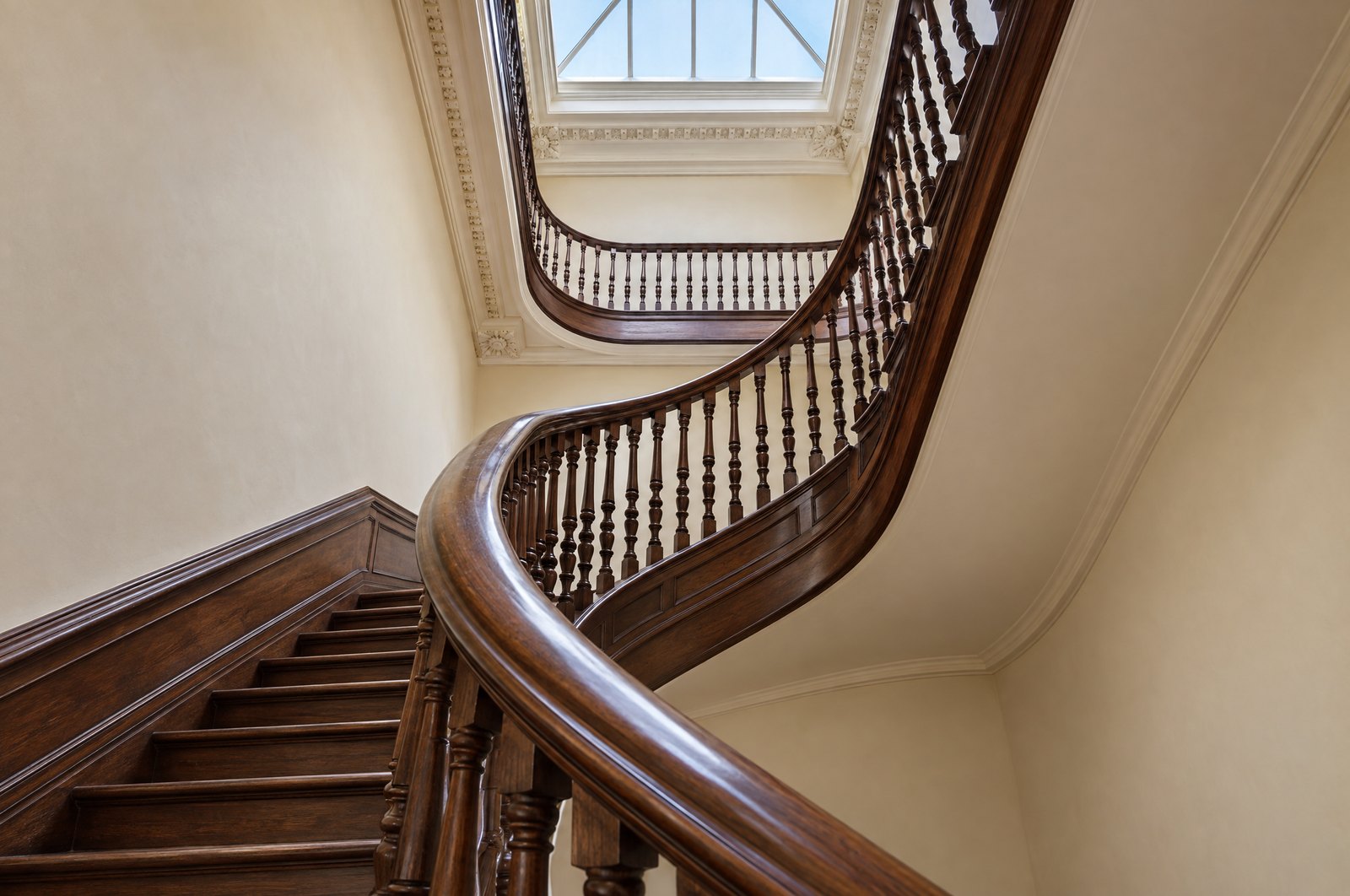
Other original details we restore

05Start here
Have a detail you want to save?
Send photos of the molding, cornice, ceiling detail or railing. We look at every request ourselves and tell you whether it can be repaired, matched or recreated, before anyone schedules a visit.